Community solar in Maryland is a permanent state program, and if your electric utility is BGE, Pepco, Delmarva Power, or Potomac Edison, you can join it. You subscribe to a share of a local solar project, the power it produces turns into credits on your electric bill, and nothing goes on your roof.
What the Maryland community solar program is
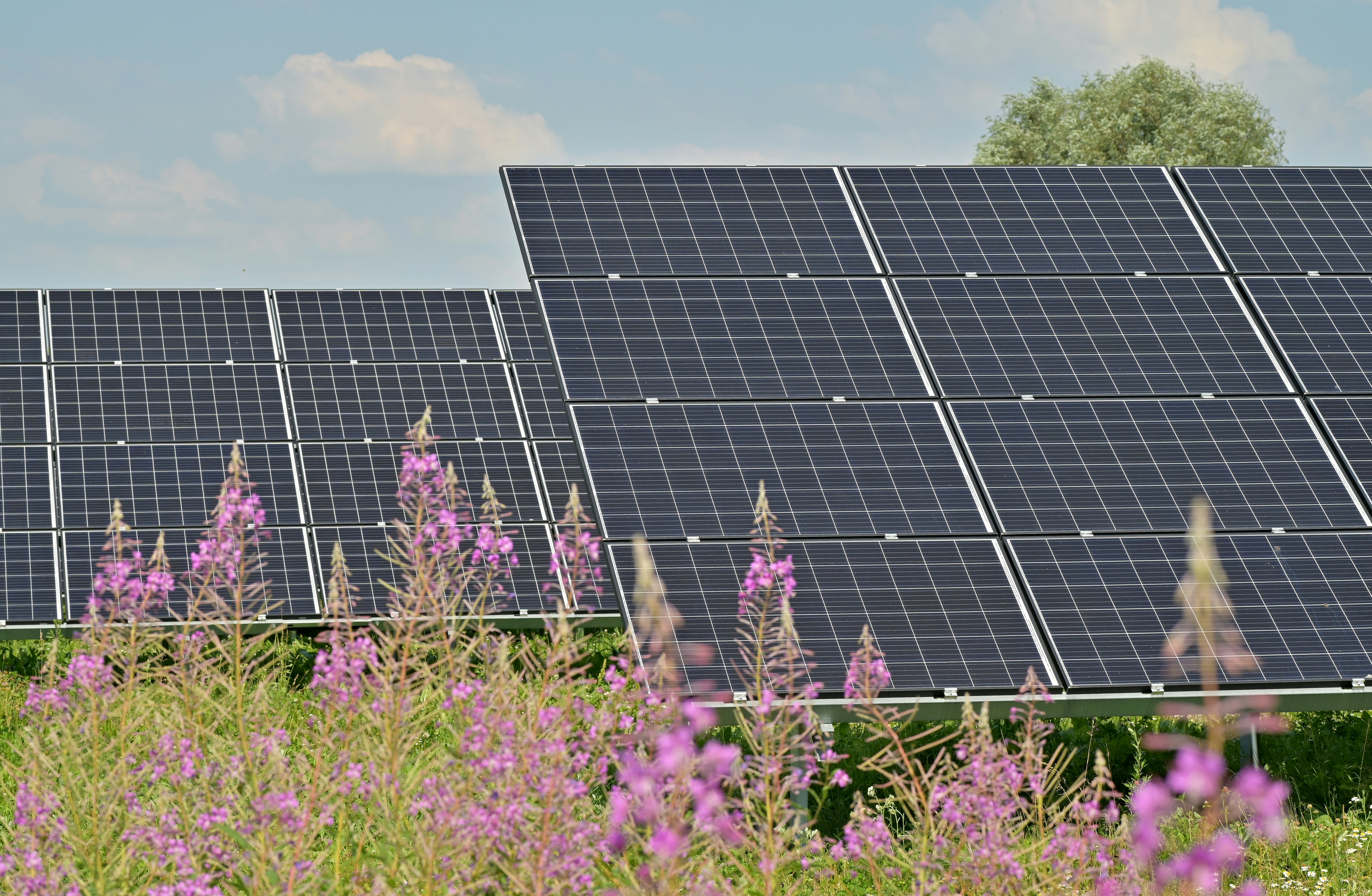
A community solar project is a solar array built somewhere in your utility's territory, often on a field or a large roof. Instead of one owner using all of its power, many households and small businesses subscribe to slices of it. Each month the utility credits subscribers for their share of what the project produced.
You don't buy equipment, you don't need a sunny roof, and you don't need to own your home. Through JoinCommunity.Solar there's $0 upfront to join.
The Maryland Public Service Commission (PSC) oversees the program. The Maryland Energy Administration (MEA) keeps a public list of projects. Neither agency sells subscriptions. Private subscriber organizations do that, and JoinCommunity.Solar helps you find one with room for you.
Pilot vs. permanent: what changed
Maryland ran community solar as a pilot for seven years. According to the PSC, "The Pilot Program officially ended its seventh and final year on December 31, 2024."
By the PSC's count, the pilot produced 139 projects representing 204 MW of operating capacity, with data as of June 30, 2024.
The permanent program came from House Bill 908, which the General Assembly passed in 2023. The PSC published the permanent program regulations on February 4, 2025. Older articles calling it a pilot that might end are out of date.
HB 908 also pushed on billing. The PSC was directed "to establish provisions to implement consolidated billing by electric companies for community solar by January 1, 2026." More on what that means for your bill below.
- 2023House Bill 908 passes, making the program permanent
- Dec 31, 2024The pilot ends its seventh and final year
- Feb 4, 2025The PSC publishes the permanent program regulations
- Oct 27, 2025Consolidated billing rules (COMAR 20.62.06) take effect
- Jan 1, 2026Utilities must offer consolidated billing
A permanent program doesn't mean every project has open spots. Projects fill up, so whether you can join depends on what's available for your account right now.
Which Maryland utilities participate
According to MEA, "Community Solar is only offered for residents of the BGE, Pepco, Potomac Edison, and Delmarva Power utility service areas."
That means your utility, not your county, decides whether you're in. If your bill comes from an electric cooperative or a municipal utility, the state program doesn't cover you.
On JoinCommunity.Solar, all four utilities use the same signup. Each one has its own page with more detail:
- BGE(Baltimore Gas and Electric)BGE community solar
- Pepco(Maryland customers)Pepco community solar
- Delmarva Power(Maryland customers)Delmarva Power community solar
- Potomac EdisonPotomac Edison community solar
Not sure which utility you have? Look at the logo on your electric bill, not your gas bill. Some Maryland homes get gas and electric from different companies.
See what your Maryland utility account qualifies for
How to sign up for community solar in Maryland
- Check eligibility. Enter your details on JoinCommunity.Solar. We confirm your utility and look at which projects serving your area have room.
- Get matched. We match you with an available project rather than handing you a list to sort through.
- Review and sign that project's subscriber agreement. This is the contract that governs your subscription. Read it before you sign.
Have a recent electric bill nearby when you start. Your account number and the name on the account are the details you'll most likely need.
What to check in the subscriber agreement
The agreement sets the actual terms. Read it with these questions in mind:
- What will I pay for each dollar of bill credit, or how is my subscription price set?
- How long is the term?
- What happens if I move? Can I take the subscription to a new address in the same utility territory?
- How do I cancel, and is there any cost or notice required?
Cancellation and moving terms vary by project. Whatever the written agreement says is what applies, so don't rely on anything a salesperson tells you that isn't in it.
How bill credits work in Maryland
Your share of the project's output becomes a credit on your utility bill. You'll usually see it as its own line, separate from your normal delivery and supply charges. Line names differ from utility to utility.
Utilities can express the credit in kilowatt-hours or in dollars, depending on how that utility handles it.
Credits move with the seasons. Long summer days mean more output than short winter ones, so your credit will be bigger in summer and smaller in winter. Don't judge the program on one month.
New subscribers usually wait a little while before the first credit appears. The exact timing depends on the project and your billing cycle.
Consolidated billing
Without consolidated billing, you see the credit on your utility bill and pay the subscription organization separately. Consolidated billing puts the subscription charge and the credit on the same utility bill, so you get one statement.
| Without consolidated billing | With consolidated billing | |
|---|---|---|
| The credit | On your utility bill | On your utility bill |
| The subscription charge | Paid to the subscription organization separately | On the same utility bill as the credit |
| Statements | Two | One |
Maryland's consolidated billing rules (COMAR 20.62.06) took effect October 27, 2025, and utilities had to offer consolidated billing by January 1, 2026. Each project chooses whether to use it, so your subscriber agreement says whether you get one bill or two. For a closer look at the bill itself, see how community solar credits show up on your electric bill.
Low- and moderate-income (LMI) households
Maryland's rules include two protections aimed at low- and moderate-income subscribers. Both come from the PSC.
First, projects "must serve at least 40% of its kilowatt-hour output to low and moderate income subscribers unless the solar energy system is wholly owned by the subscribers." So unless subscribers own the project, at least 40% of each project's output is reserved for LMI households.
Second, there's a savings floor. Subscription organizations are "restricted from charging a low-to-moderate income subscriber a subscription rate that is more than 90% of the monetary value of the bill credit," which the PSC says helps "ensure that these low-to-moderate income subscribers receive 10% savings." For LMI subscribers on consolidated billing, COMAR 20.62.06.04 likewise requires a savings rate of at least 10 percent.
Illustration only (not a current offer): Say your community solar credit is worth $150 in a given month. At the 90% cap, an LMI subscriber would pay no more than $135 for that month's subscription. The $15 difference is the minimum savings on that credit.
of each project's output is reserved for LMI households, unless subscribers wholly own the project.
The most an LMI subscriber can be charged, as a share of the bill credit's value.
Illustration only (not a current offer)Households often show LMI status through enrollment in an assistance program such as SNAP, energy assistance (MEAP/LIHEAP), Medicaid, Head Start, or free and reduced-price school meals. Treat those as common examples, not the full legal list. When you sign up, you can tell the subscriber organization you're an LMI customer, and it can verify your eligibility.
If you think you qualify, say so when you check eligibility. Projects with open LMI space show up there.
See what your household qualifies for
Renters and people who already have rooftop solar
Renters can join. The subscription is tied to your electric account, not to the building, so you don't need a landlord's permission or a roof. There's more on that in can renters go solar.
Rooftop solar owners can subscribe too. Your community solar subscriptions plus any net-metered rooftop generation can't exceed 200% of your baseline annual usage (COMAR 20.62.02.05). If you already have panels, mention it when you check eligibility so the subscription is sized correctly.
Using the MEA project list yourself
MEA publishes Maryland's community solar projects on its Maryland Community Solar page. The list includes an LMI column showing projects with special LMI discounts.
To use it:
- Filter to your utility. A project in another utility's territory can't serve you.
- Check the Subscription Management Status column to see whether the project is taking subscribers.
- Note the LMI column if you qualify.
- Find the organization in the Subscriber Management Organization column and contact it directly.
It works, but it's slow. You may call several organizations before finding one with room. If you'd rather skip that, we'll check for you. For general tips on comparing projects, see how to find the best community solar program.
Protecting yourself
Community solar in Maryland is legitimate and state-regulated, but the PSC does not regulate community solar rates. The price is whatever you agree to in writing, so the contract is your protection.
A few habits help:
- Read the full subscriber agreement and the contract summary disclosure before signing.
- Be wary of anyone at your door pushing you to sign that day. Under Maryland's door-to-door rules, salespeople must wear a badge and give you a card with their company's PSC approval number.
- Never give out your utility account number to someone you didn't contact or can't verify.
- Ask for the organization's PSC license or approval number and check it with the PSC.
FAQ
What is the Maryland community solar program?
It's a state program that lets BGE, Pepco, Delmarva Power, and Potomac Edison customers subscribe to a share of a local solar project. The project's output becomes credits on your electric bill. You don't install panels. The Maryland PSC oversees it.
Is Maryland community solar still a pilot?
No. The PSC says the pilot ended its seventh and final year on December 31, 2024. House Bill 908, passed in 2023, created the permanent program, and the PSC published its regulations on February 4, 2025.
Which utilities offer community solar in Maryland?
MEA says community solar is only offered in the BGE, Pepco, Potomac Edison, and Delmarva Power service areas. If your electricity comes from a co-op or municipal utility, you're outside the state program.
How do I sign up for community solar in Maryland?
Check your eligibility on JoinCommunity.Solar, and we'll match you with an available project serving your utility. Then you review and sign that project's subscriber agreement. Have a recent electric bill handy.
Can BGE customers join community solar?
Yes. BGE is one of the four Maryland utilities in the program. BGE customers use the same signup on JoinCommunity.Solar as everyone else.
What did HB 908 change?
HB 908 made community solar permanent in Maryland after the pilot. It also directed the PSC to set up consolidated billing provisions by January 1, 2026. The permanent program regulations were published on February 4, 2025.
How much can LMI households save?
PSC rules cap what an LMI subscriber can be charged at 90% of the bill credit's value. That works out to at least 10% savings on the credit. Projects must also serve at least 40% of their output to LMI subscribers unless they're wholly owned by subscribers.
Can Maryland renters join community solar?
Yes. The subscription is tied to your electric account, so you don't need to own the building or have a roof. Moving terms are set by your subscriber agreement, so check them before you sign.
Where is the official list of Maryland community solar projects?
The Maryland Energy Administration publishes it on its Maryland Community Solar page. It includes an LMI column showing projects with special LMI discounts. You can filter by utility and contact the managing organization yourself.
How do community solar credits appear on a Maryland bill?
The credit usually appears as its own line on your utility bill, though line names vary by utility. It grows in summer and shrinks in winter because solar output changes with the seasons. Look at a full year of bills before deciding how it's working.
What is consolidated billing for community solar in Maryland?
Consolidated billing puts your community solar charge and your credit on one utility bill instead of two. PSC rules required utilities to offer consolidated billing by January 1, 2026, but each project decides whether to use it, so check your agreement.
Who regulates community solar subscriber organizations in Maryland?
The Maryland Public Service Commission oversees the community solar program. Ask any organization you deal with for its PSC license number. The PSC does not regulate community solar rates, so your price is whatever your written agreement says.
JoinCommunity.Solar is operated by Our Power Co. (DBA My Utility Advisor), Maryland PSC Subscription Coordinator License No. 23D3065350006676. We are not the PSC or MEA and do not run the state program.